



Where agents fit in the delivery loop
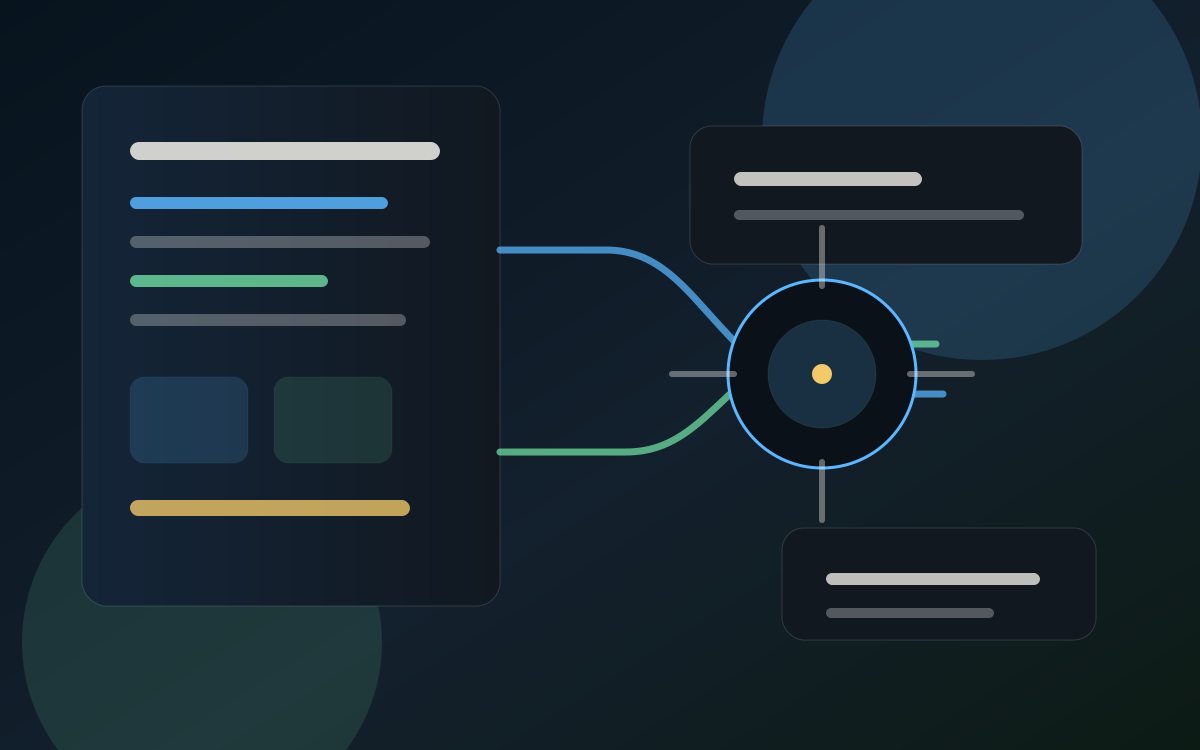
AI agents are changing software development because they can participate inside the work loop instead of only explaining code from the outside. A useful agent can read requirements, inspect a repository, identify the files that matter, create a patch, run checks, and report back with the tradeoffs it found.
That shift matters because software delivery is not one activity. It is discovery, design, implementation, verification, documentation, deployment, and support. Agents can help in several of those steps when the task is scoped well and the team gives them the same context a human teammate would need.
Practical uses and review boundaries
The strongest use cases today are practical: investigating failing tests, drafting focused test coverage, updating repetitive UI states, preparing migration notes, summarizing error logs, documenting APIs, and turning rough tickets into implementation-ready work. These are the moments where teams lose hours to context switching and routine execution.
Human judgment still sits at the center. Architecture, security posture, data model decisions, product tradeoffs, accessibility, release timing, and customer impact need accountable people. Agents make those people faster when they produce reviewable work instead of invisible magic.
Build the workflow around accountable review
Good teams also redesign their process around agents. Tickets need acceptance criteria. Repositories need reliable local checks. Pull requests need small diffs. Environments need clear setup notes. The more repeatable the engineering system becomes, the more useful an agent can be inside it.
For business leaders, the opportunity is not simply cheaper code. It is a delivery model where small teams can keep momentum, reduce backlog drag, and preserve senior attention for the decisions that actually require senior taste. That makes AI adoption an operating question, not only a tooling question.
Raymuko approaches AI agents as workflow participants. We care about where the agent enters the process, what it is allowed to change, how it proves the work, and when a human should approve the next step. The result is software delivery that feels faster without becoming careless.
Explore product engineering services