



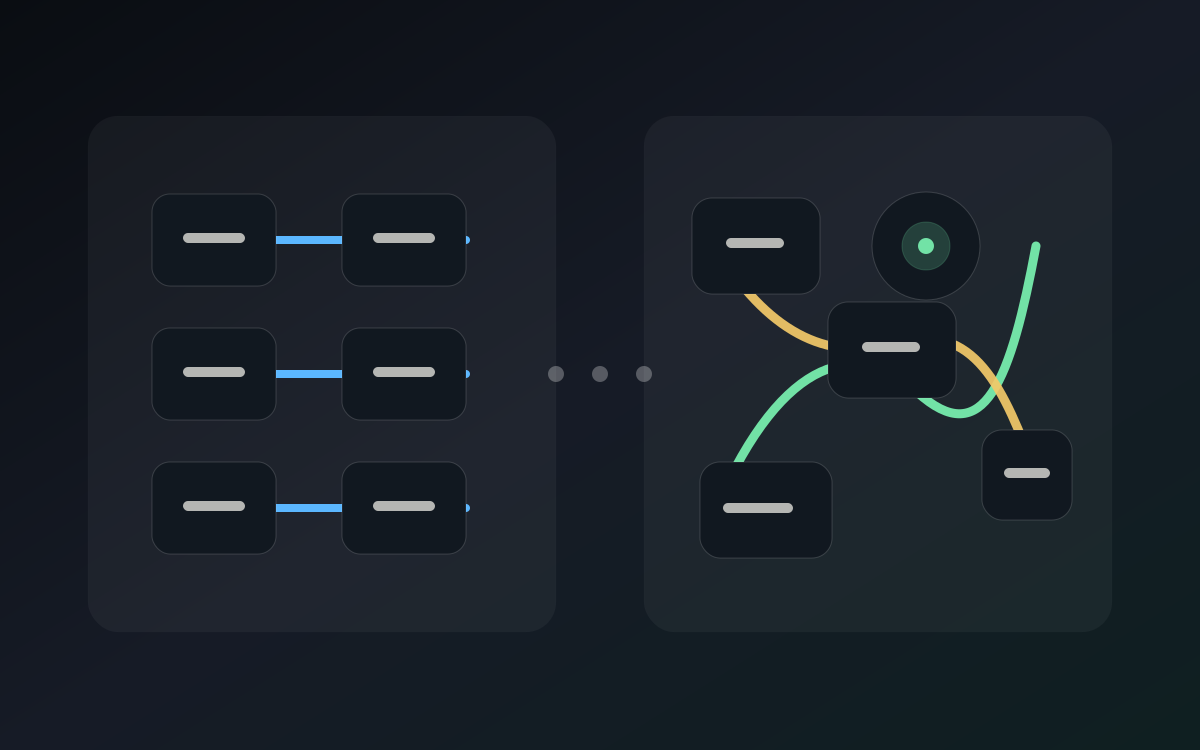
Use fixed automation for predictable work
Traditional automation is excellent when the process is predictable: when this happens, do that. It can move a lead into a CRM, send a receipt, create a calendar invite, update a spreadsheet, or notify a team when a form is submitted. It is fast, reliable, and usually inexpensive to maintain.
Use agents where context matters
AI agents are different because they work with context. They can read an unstructured message, compare it to instructions, draft a useful response, decide which category a request belongs in, summarize a document, or prepare the next step for a human to approve.
That flexibility is powerful, but it should not be used everywhere. If the rule is stable, use normal automation. If the task requires language, interpretation, summarization, prioritization, or a first draft, an AI agent may be a better fit. The point is to match the tool to the shape of the work.
Combine both with clear boundaries
A healthy business system often combines both. Traditional automation handles the rails: routing, notifications, permissions, timestamps, records, and reminders. AI agents handle the flexible layer: reading, classifying, drafting, extracting, and explaining.
Boundaries are what make the system trustworthy. An agent might draft a client email but wait for approval before sending. It might classify a support request but log the reason. It might suggest a price range but never change billing records without a person. Clear limits prevent useful automation from becoming risky automation.
Business owners should evaluate AI systems by looking at the whole workflow. What data does it read? What can it change? What happens when confidence is low? Who reviews the output? Where is the activity logged? These questions are more important than whether a vendor uses impressive language.
Raymuko builds AI and automation systems with those boundaries in mind. The best result is not a flashy demo. It is a calm operating layer where fixed rules do the predictable work, agents help with messy information, and humans stay in control of decisions that matter.
Explore AI and automation services